Video: Green Education Foundation founder Charlene Nijmeh tours textile recycling and manufacturing facilities while she describes 15 years of keeping used clothing out of landfills through a closed-loop recycling network, and new projects to bring green jobs to California. Captions are shown on screen.
A message from our founder
Seed Minds.
Save the Future.
What we hold in our hands today becomes the world our children inherit.
Endorsed at Houston City Hall
Houston’s City Council saw our donation stations up close, then made room for them in city law.
On March 1, 2023, Council approved Ordinance No. 2023-151, creating a permit for solar-powered, camera-monitored “donation stations” like our Neighborhood Donation Recycling Stations. Before the vote, council members explained why.19,20
Remarks from Council’s discussion of Agenda Item 13 (donation stations), March 1, 2023. Video: HTV broadcast excerpt, posted by Green Education Foundation.19,20
“Back in November, we met with the reps from Green Education Foundation and got a tour of these donation stations. I’m very impressed with these donation stations.”
“I’m happy to support these donation stations in our communities. They’ve done a really good job of thinking through all of the things that have caused us anxiety with these boxes.”
“It’s not just benefiting District K, it’s benefiting the entire city… Thank you for bringing this forward expeditiously, and for the partnership with this foundation to get these going, because it’s fantastic.”
“When driving around in neighborhoods, you can see the difference.”
Chapter One · The Challenge
Every second, a garbage truck full of clothes disappears into the earth or goes up in smoke.1
Look down at what you’re wearing. Now picture a whole truckload of it. Then picture it again one second later, and again, for every second of every day.
A planet’s worth of clothing, thrown away.
Here in the United States we recycled just a sliver of the textiles we discarded. The rest went into landfills, where they sit for generations.3
Making clothes in the first place costs the planet dearly.
of global carbon emissions come from the fashion industry.1
gallons of water to make a typical pair of jeans.1
of the microplastics lost to the ocean each year come from textiles.1
The hardest number is the smallest one: less than 1% of the world’s textile fibre comes from recycling old textiles into new ones.2
This isn’t a problem for the next generation to solve. It’s the one we’re handing them.
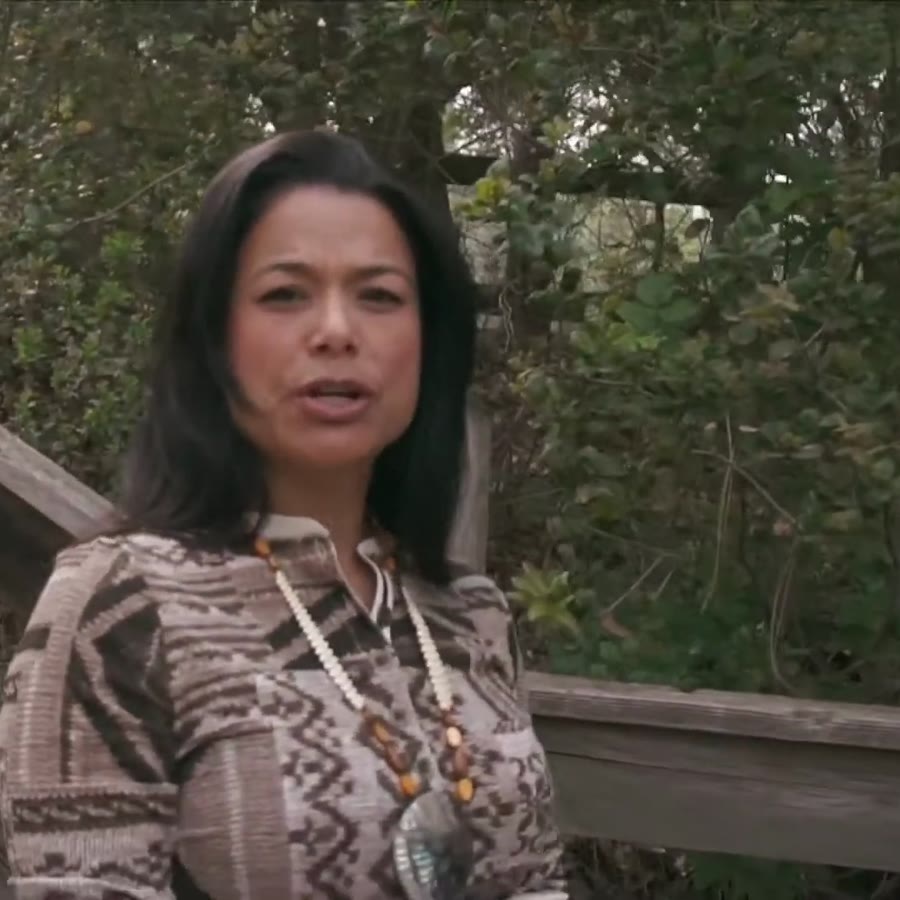 Hear Charlene’s message
Chapter Two · Our Story
It began with a teaching handed down through generations: care for the Earth for those who come after us.
Charlene Nijmeh grew up in a Native American household, the daughter of her tribe’s chairwoman.5 Her family descends from the first peoples of the San Francisco Bay Area.6 As a child she learned that the people of this planet carry a responsibility to protect Mother Earth.5
Before there was a foundation, she produced an educational DVD to teach students what it means to live green.5 In August 2011, together with former Muwekma Ohlone Tribal leadership, she founded the Green Education Foundation in San Jose, California,7 built on one conviction: the task of teaching our children to care for the planet rests squarely on our shoulders.5
“We must stop talking and start acting like we care about our children and whether they have clean air to breathe, clean water to drink, and a healthy planet to live on.”8Charlene Nijmeh, Founder
Chapter Three · Our Mission
We plant seeds of awareness, because seeds grow into forests.
Our children hear mixed messages about the planet every day, and many schools want to teach sustainability but don’t have the budget.5 Our mission is to educate students and the public on building an environmentally safe society,18 and to help our children know enough, and care enough, to keep looking for answers.5
Chapter Four · How We Act
Turning what we throw away into what our communities need.
Donation Stations (NDRS)
A shipping container’s second life, and a second life for everything inside it.
We rebuild retired 20-foot shipping containers into solar-powered donation stations, monitored around the clock and lit at night.9 Reusable items find new owners; the rest goes to fiber recyclers. Proceeds support schools and green education.5
Backpack Exchange
Trade an old one for a new one.
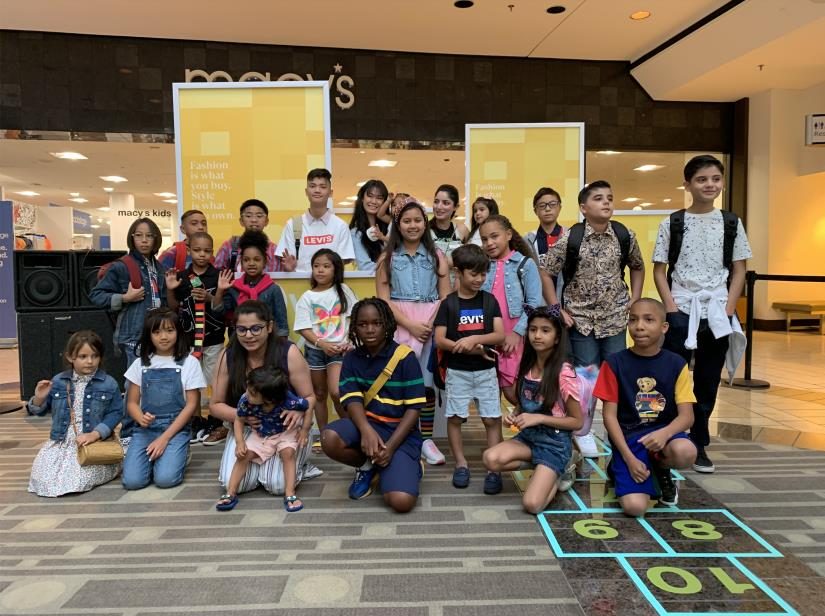
Each summer, students bring in unwanted items and leave with a brand-new backpack full of school supplies.10 A small exchange that teaches a big lesson: what we reuse, we keep out of the ground.
Green Education
Classrooms that come alive.
With CHEER, we bring a Coastal Watershed Garbage Museum and an Upcycling Exhibit to schools. Students see where waste ends up, learn how it could be reused, and go home as recycling ambassadors.11
You donate→Items are reused or resold→The rest becomes fiber→Proceeds fund schools
Chapter Five · Impact
Proof that small acts, multiplied, move mountains.
of materials kept out of landfills every year.12
our annual goal.12
Neighborhood Donation Recycling Stations serve California, Texas and several Mid-Atlantic states.9
serving communities as a 501(c)(3) public charity.7
Houston, Texas
After City Council passed a Donation Station ordinance, GEF diverted 1,032,624 pounds of textiles in Houston, and 5,893,421 across Texas, in one year.13
“It has been such a positive program for the City of Marina that I would recommend this to any City.”14Bruce Delgado, Mayor of Marina, California
Laughlin Air Force Base
The first military base to install an on-site Neighborhood Donation Recycling Station.15
Tenis Con Alas
“Sneakers with Wings” with Club América and Fundación Televisa took sports recycling from Estadio Azteca to the Rose Bowl, SoFi Stadium and the Cotton Bowl.16
Beyond our borders
Relief for families after the earthquakes in Türkiye, and 300,000 pounds of clothing, jackets, blankets and supplies sent to Ukraine.17
Chapter Six · Join Us
The next generation is watching what we do with this one.
Every bag you drop off, every school that signs up, every dollar you give plants another seed.
Donate items
Clothes, shoes, toys, dishes, linens. Find your nearest donation station.
Find a station 02Give
Fund green education for students, once or every month. Gifts are tax-deductible.
Donate now 03Host a station
Property owners, cities, churches and schools can host an NDRS.
Become a host 04Bring us to your school
Backpack Exchange, Garbage Museum and the Upcycling Exhibit.
See programs“Let us put our minds together and see what life we can make for our children.”Sitting Bull